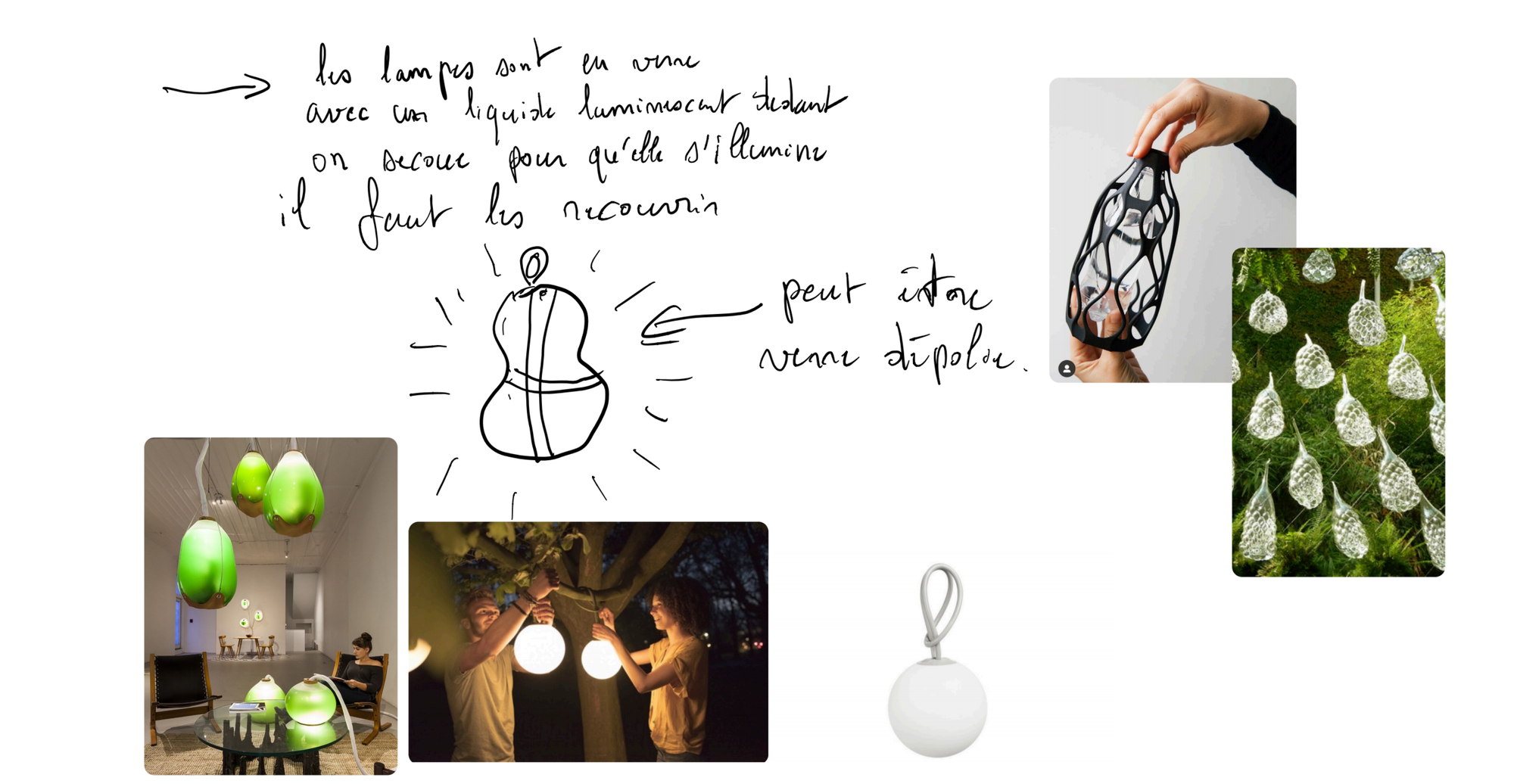
In Vesper, light is alive. Bioluminescent cultures sealed in translucent vessels. Warm, amber. Not fire — something closer to the glow inside a living body.
You feed these lamps. Fermented algae, organic matter. Skip a day, the light dims. Skip a week, it dies. Light has a daily cost, like bread. The wealthy have bright homes. The poor are swallowed by nightfall.
When we shot the film, we needed this light to exist for real. Not added later — real light, on set, on the actors' skin.
We hired Latvian glassblowers. Hand-blown vessels, irregular, beautiful. We tried filling them with amber liquid, placing the light inside so the glow would come from within. It didn't work. Too clean. Looked like a prop.
Then we wrapped the glass in a thin membrane of latex. Paper-thin, slightly irregular. And the light changed completely. It filtered through the latex like light through skin — like being inside a living thing. The actors moved differently. The crew went quiet. Everyone was inside the world.
After sunset, the poorest families navigate by touch, by memory, by the faint glow of moss on the walls. The rich have rows of glowing vessels, tended, passed down. The glass is precious. The cultures are guarded. Light is inheritance.
All of this from one question: how do people see in the dark?