
I don't make projects. I build worlds. Some became films. One became a room. One was a conversation with a ghost. Each started the same way — with a question I couldn't answer, followed until a world grew around it.
THE VESPER WORLD
Cinema — Growing since 2011
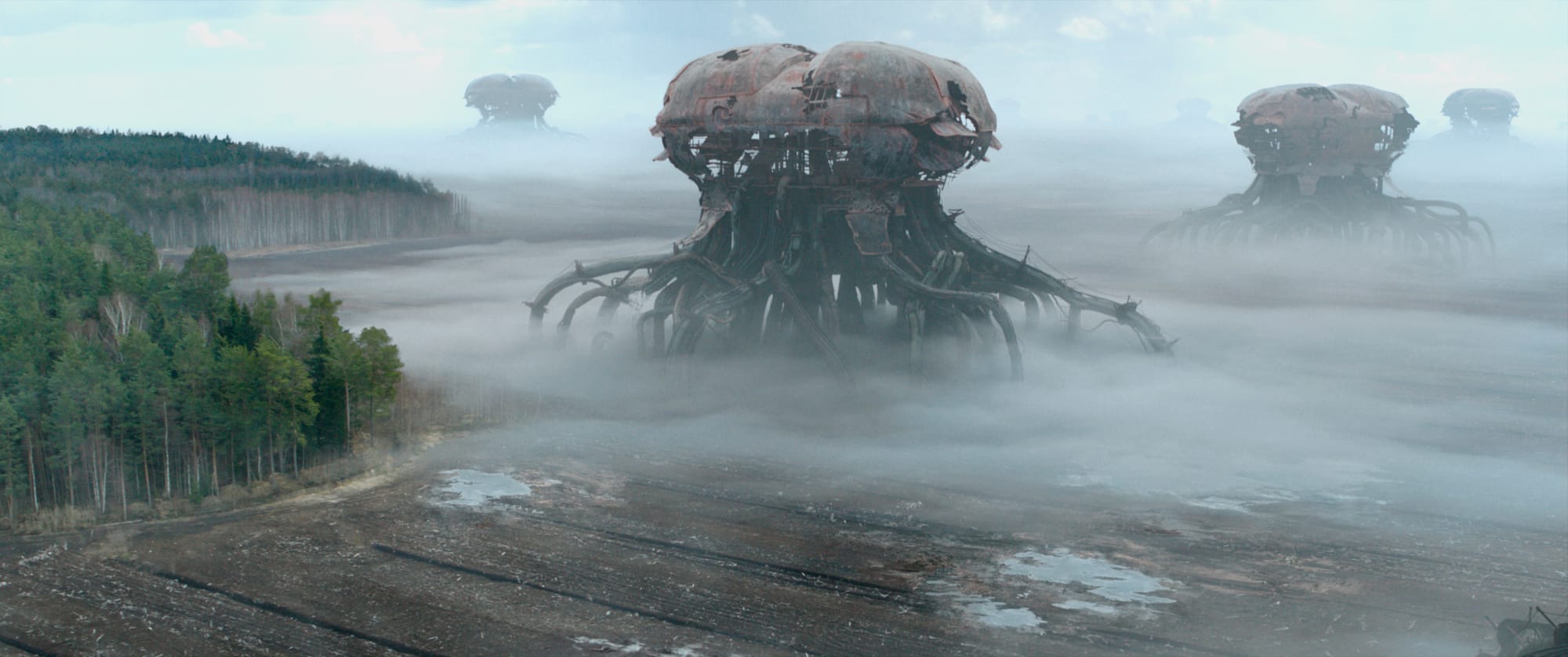
It started with a subtraction: remove the animals. All of them. Then follow every consequence.
No birds in the morning. No dogs in the distance. People eat insects, roots, engineered seeds. Human blood has become currency. Every surface is warm, wet, alive — you touch a wall and you're not sure it stopped growing. And the strangest thing: some organisms carry traces of human DNA. A grain of skin on a vegetable surface. The softness of a lip on a petal. Not enough to be human. Just enough to unsettle you.
This world has been growing for fifteen years across eight dimensions — materials, light, sound, food, death, transport, clothing, social organisations. It produced a feature film (Vesper, 2022 — released theatrically in over 30 countries), and it's still expanding. The world is larger than any single story set inside it.
THE CONSCIOUSNESS
Cinema — 2012
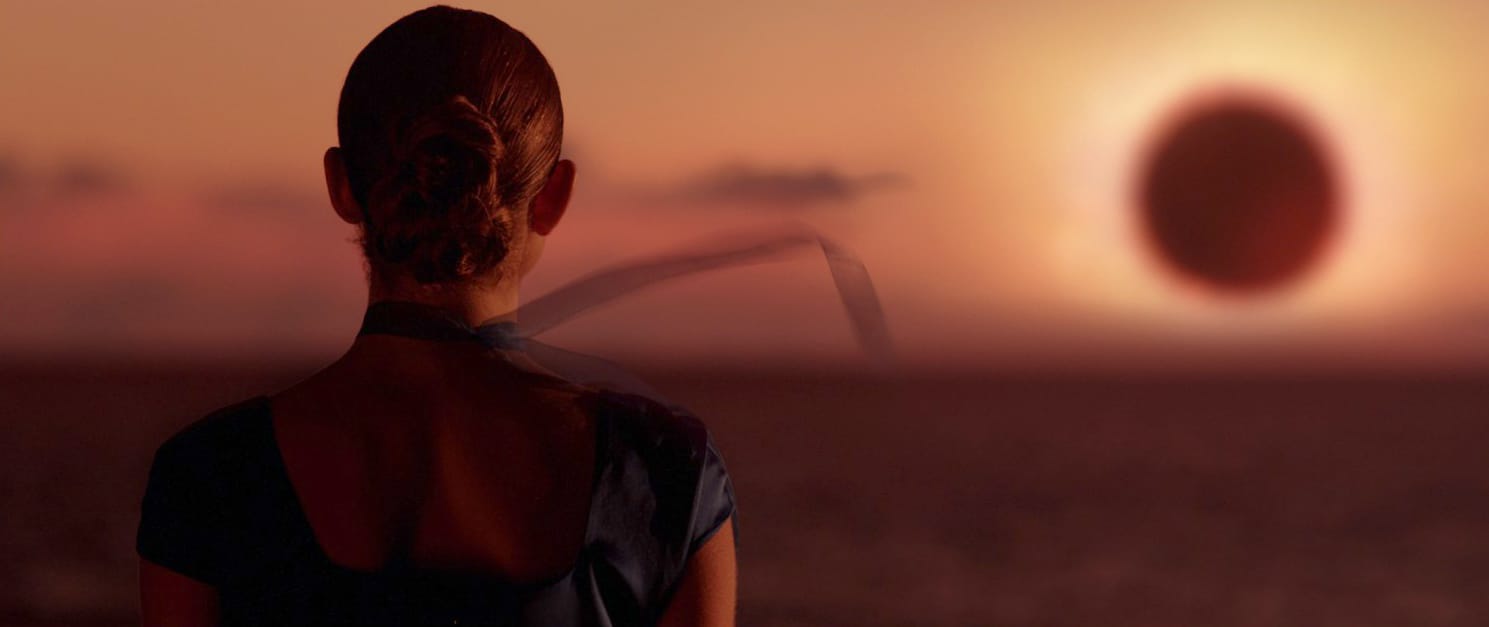
Vanishing Waves was our first feature with Kristina Buožytė. The first Lithuanian science fiction film. 24 international awards. The Golden Méliès at Sitges. A scientist enters the consciousness of a comatose woman — and what he finds there is not memory, not dream, but a world. A world with its own beauty, its own gravity. A world that doesn't want him to leave.
THE ROOM
Augmented reality — 2018
Proof that a world doesn't need to be large. It needs to be real.
A child's bedroom. Four years of war told through objects that appear, change, and disappear. A stuffed bear on the floor. Drawings that darken. A window that gets boarded up. No characters. No dialogue. You stand in the room and the room does everything.
Built for the International Committee of the Red Cross. Presented at the World Economic Forum in Davos. Heads of state wept. Not because of what they saw — because of what the room made them understand without showing it.
The smallest world I've built. The one that hit hardest.
THE ORACLE
Interactive fiction / Web — 2007
J.G. Ballard spent forty years in a suburban house in Shepperton, surrounded by motorways and shopping centres, anticipating every neurosis of the modern world. They called him the Oracle of Shepperton.
With Thomas Cazals and Jacques Barbéri, I built a world inside that prophecy. Not a film. Not a website. Something between — found footage, fake documentaries, fictional scenes, and chatbots you could talk to. Commissioned by French TV Arte. The user didn't watch the Oracle — they wandered through his mind.
It was 2007. Nobody called this "AI" yet. But the question was already there: what happens when a world talks back?
THE SWARM
Video game / synthetic ecosystem — 2002–2006
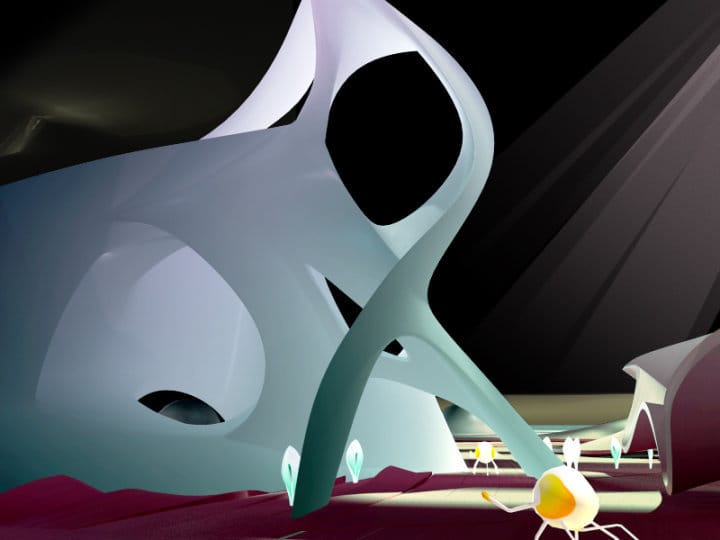
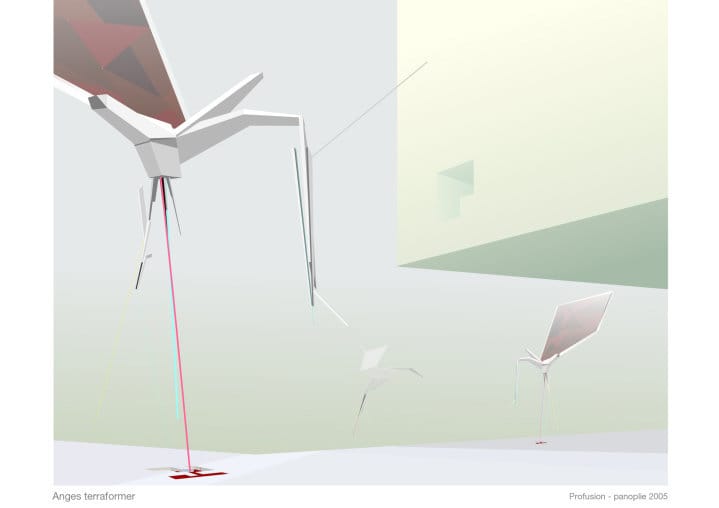
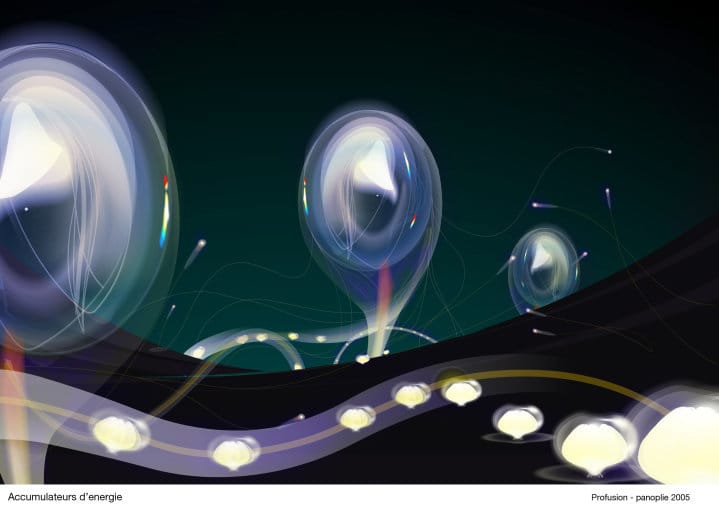
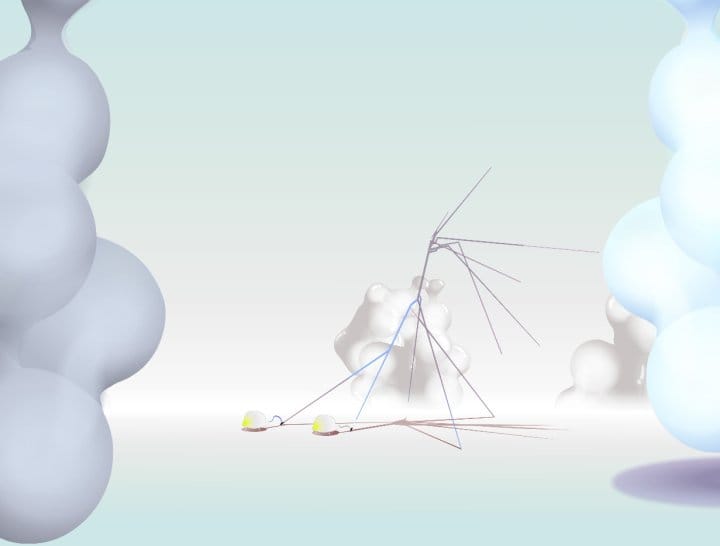
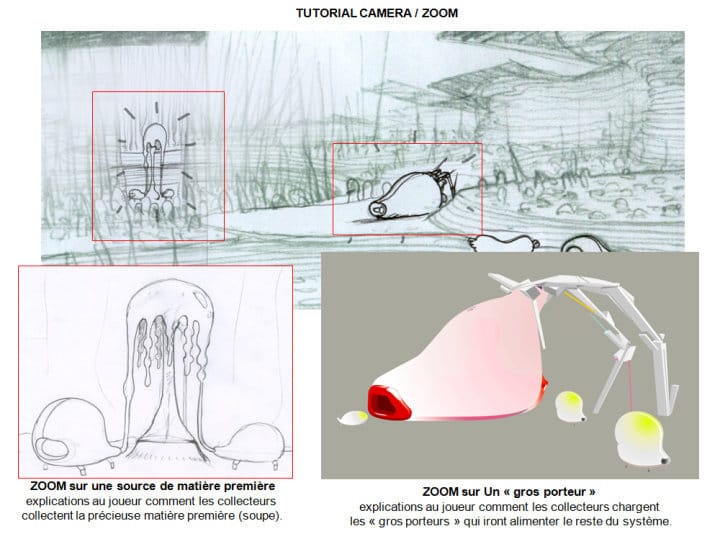
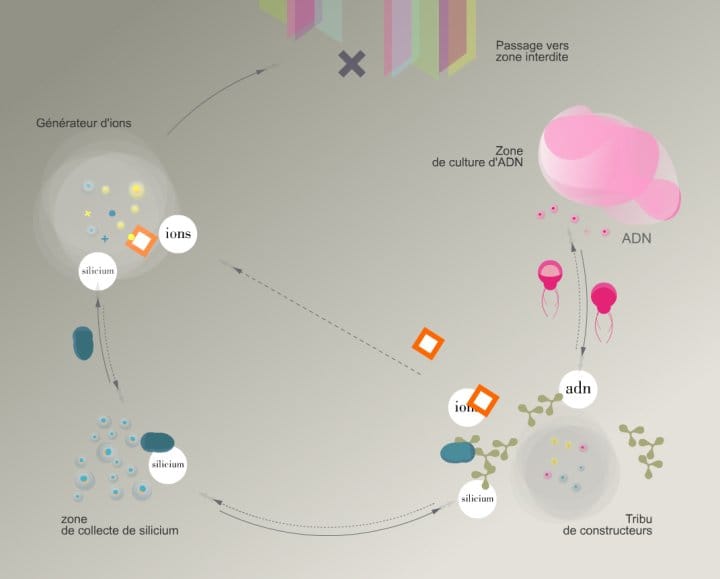
A world at microscopic scale. An entirely synthetic ecosystem where nothing is familiar.
In Profusion, you don't play a character. You play a species — a swarm of self-replicating nano-creatures that develop emotions, learn to communicate, and evolve collective intelligence as they discover their ecosystem. Four years of intense preproduction and worldbuilding — designing every organism, every behavior, every rule. It never shipped, but it shaped everything that came after.
The game grew out of years of experimenting with online worlds and interactive systems, including Society, the first online game acquired by the French national art collection.
The question behind all of it: can you design a world so alive that it surprises its own creator?
That question never stopped.
THE PROTOFORM
Speculative fiction / Web — 2001
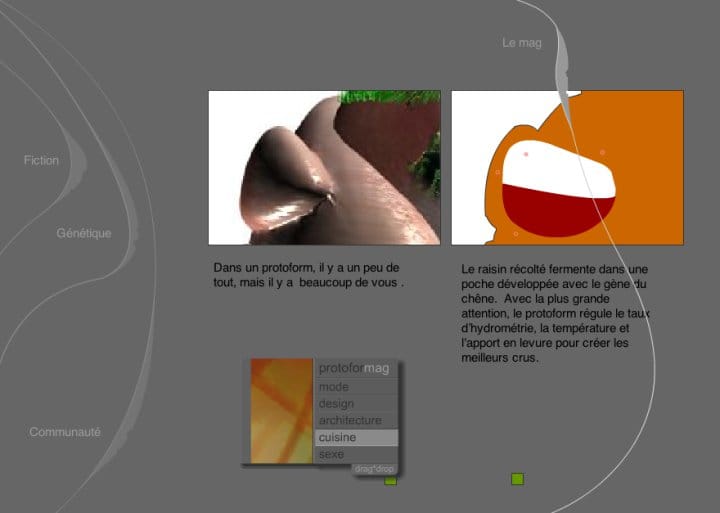
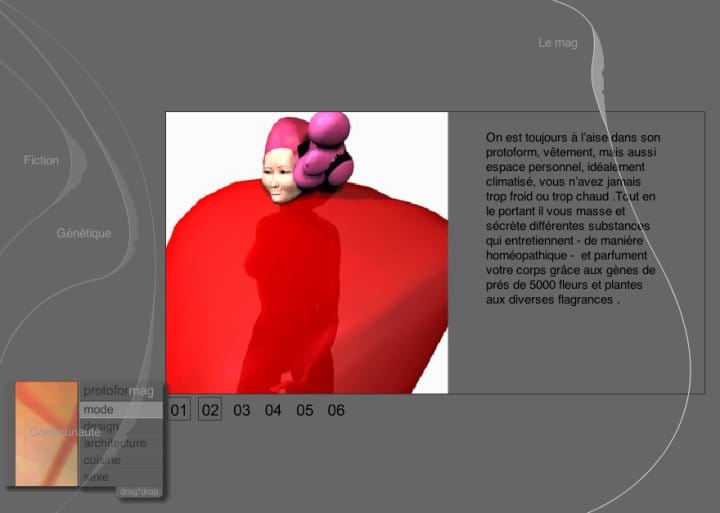
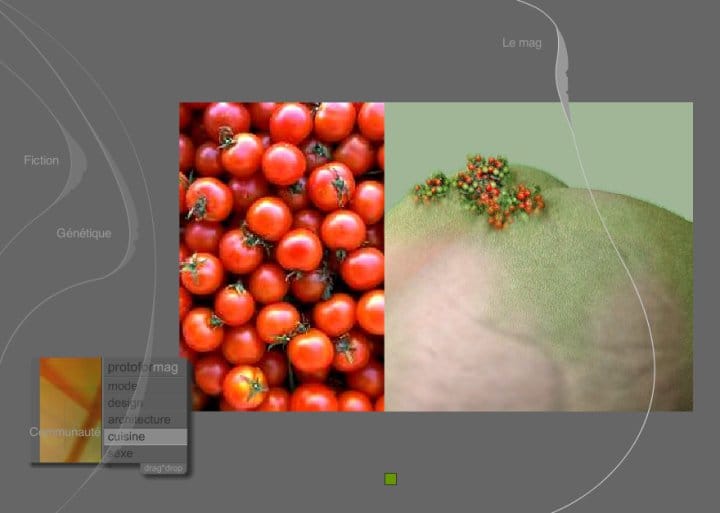
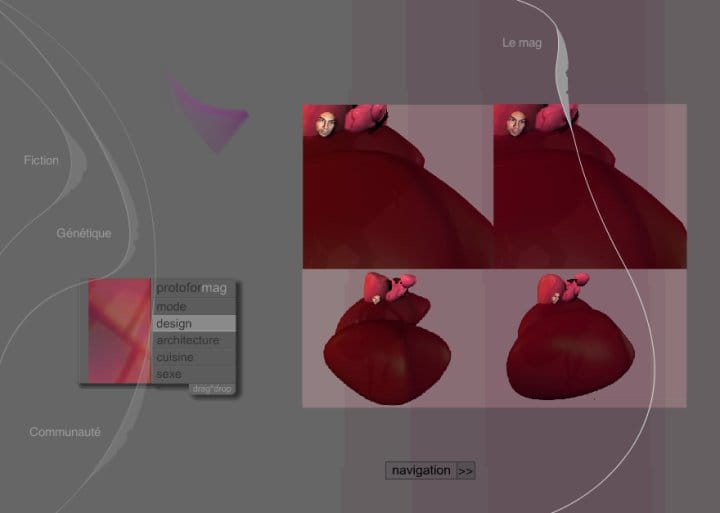
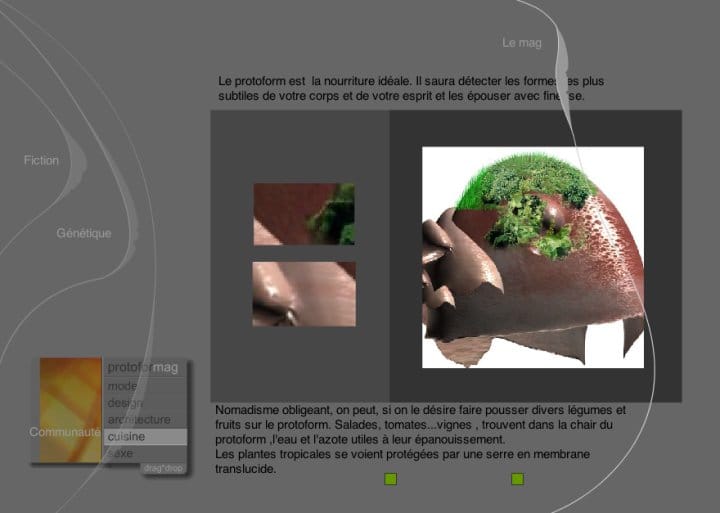
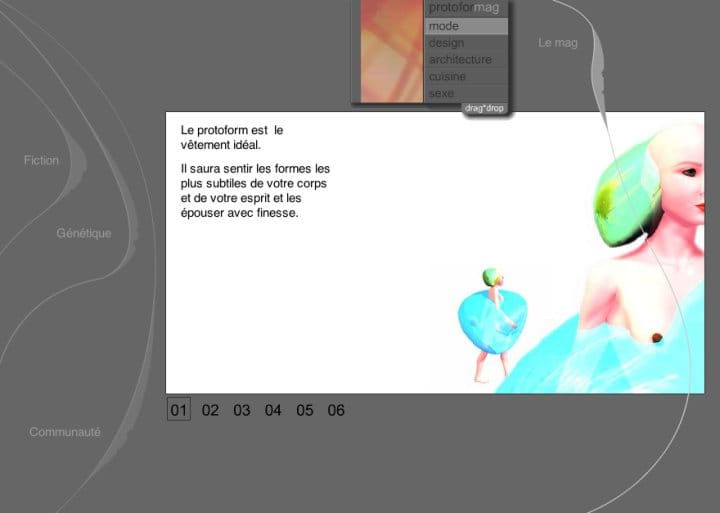
Imagine every genome on Earth — every plant, every animal, every microorganism — mapped, decoded, and merged into a single creature. Your creature. Born with you. It's your clothing, your food, your medicine, your shelter. It changes shape, texture, temperature. It knows what you need before you do. Humanity is nomadic again — you travel with your protoform and it is everything.
We built a website that presented this creature as if it already existed. A product catalogue for something impossible. Sections for fashion, architecture, cuisine, genetics, sexuality — each one exploring what life looks like when a single organism replaces every object you own. The tone was commercial, seductive, matter-of-fact. As if this were normal. The goal was to build the foundations of a persistent online world — a universe people could inhabit. It was my first attempt at worldbuilding.
The real question underneath: what happens to a civilization that has everything? What remains of desire when desire is anticipated? What does a society look like when scarcity is gone and the only thing left to want is wanting itself?
THE ORGANISM
Web — 1998
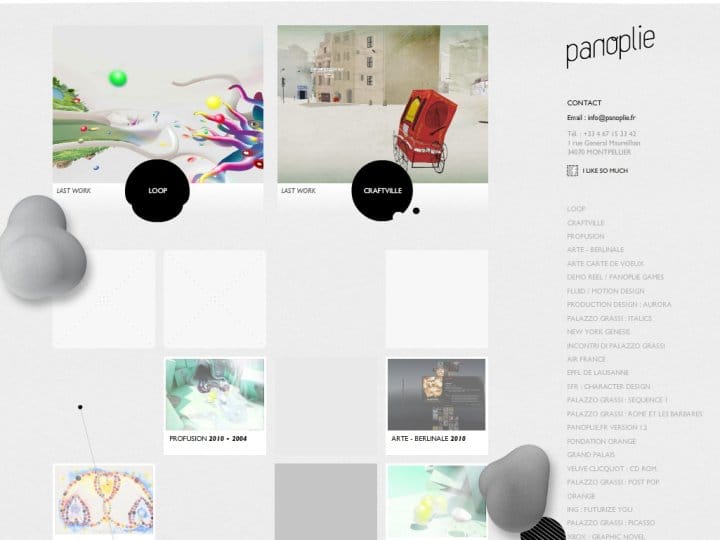
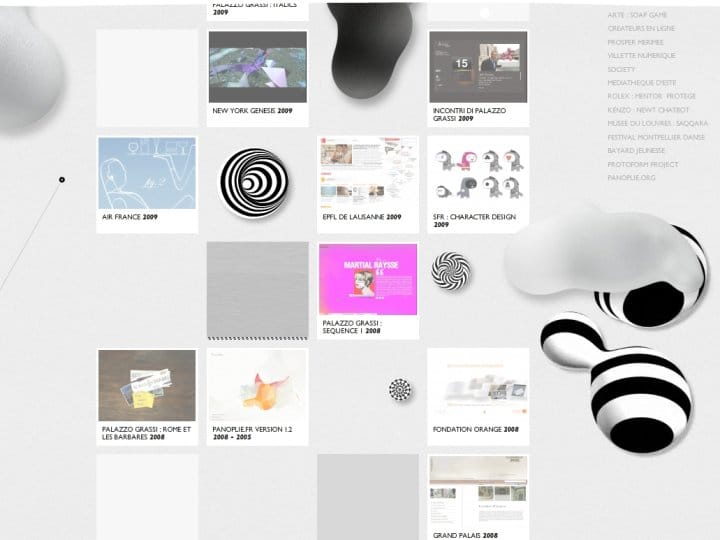
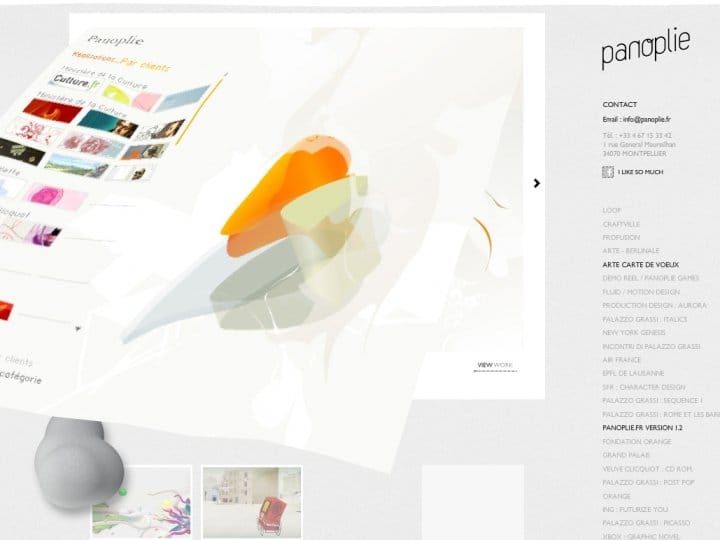
Before any of this, there was panoplie.org
Not a website — an organism. A living publication that breathed, grew, and invited people in. Each issue was a new chamber: an artist, a scientist, a chef, a thinker, a gardener, a clown etc... — each one experimenting with a medium that didn't have rules yet. The design was organic, as if the site itself were alive. You navigated it the way you'd explore a body.
It was 1998. The web was text and links. Panoplie.org was something else — one of France's earliest experiments in treating the web as a living medium, not a page. It's where everything started.
WHAT'S GROWING
Other worlds I'm not ready to show yet.
Enter the Room — ICRC · Ad Age
Vesper — Variety · IndieWire · Sight & Sound · Screen Daily
Vanishing Waves — IndieWire
panoplie.org — Centre Pompidou · Le Monde
L'Oracle de Shepperton — Fondation Lagardère
IMDb